

Buying an engagement ring can feel exciting, emotional, and slightly stressful all at once. There is the budget to think about, the style, the setting, the stone size, and that quiet pressure to choose something that feels “right” for a once-in-a-lifetime moment. No wonder people compare options carefully before walking into a jewelry store or clicking checkout online.
The debate around moissanite vs Diamond has become much more common because couples are no longer looking at diamonds as the only serious choice. Many buyers still love diamonds for their tradition, rarity, and classic beauty. Others are drawn toward moissanite because it gives a bright, elegant look at a much lower price.
Neither choice is wrong. The better option depends on what the couple values most. Some want heritage. Some want size. Some want sparkle. Some want a smart buy that leaves room in the budget for the wedding, honeymoon, or home savings. That is why this comparison matters.
Moissanite is a gemstone made from silicon carbide. Natural moissanite is extremely rare, so nearly all moissanite used in jewelry today is lab-created. That does not make it fake. It just means the stone is grown in a controlled environment instead of being mined from the earth.
Moissanite is a very popular diamond alternative because it looks bright, clear and luxurious, but doesn’t carry the same price tag as a diamond. It has its own beauty too. It is not just a “cheap diamond copy,” although people sometimes describe it that way unfairly.
It reflects light in a very lively way, often with more rainbow flashes than a diamond. Some people love that extra fire. Others prefer the cleaner white sparkle of a diamond. This is really a matter of taste.
Diamonds have a long history of engagement rings. They are famous for their hardness, brilliance, tradition and emotional symbolism. To many, a diamond still feels like the classic choice, partly because it’s been marketed as such for generations.
Diamonds also are formed in nature over a very long period of time, adding to their sense of rarity and romance. Even lab-grown diamonds, which are now common, still share the same chemical structure as mined diamonds.
In any engagement ring comparison, diamonds usually win on tradition. They carry cultural weight. A diamond ring is instantly recognized, easily understood, and widely accepted as the standard engagement ring.
Some buyers simply want a diamond because it feels timeless. They may not care if another stone offers better size for the money. For them, the word “diamond” matters. That emotional connection should not be dismissed because jewelry is never only about numbers.
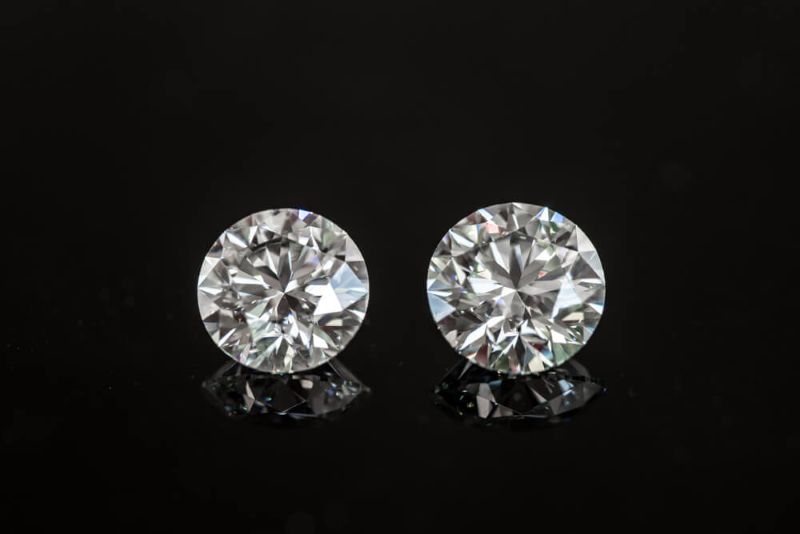
One of the biggest differences between the two stones is sparkle. Diamonds are known for brilliance, which means white light return. A fine cut diamond can appear crisp, bright and elegant. Moissanite has more fire, meaning more colorful flashes of light.
In regular daylight, both can look beautiful. Under store lights, moissanite may look extra sparkly, sometimes even more noticeable than a diamond. Some people find that stunning. Others feel it looks too flashy, especially in larger stones.
When comparing moissanite vs Diamond, the best approach is to see both stones in person if possible. Photos and videos help, but they do not always show how a stone behaves on the hand.
This is where moissanite gets a lot of attention. Moissanite usually costs much less than a diamond of similar size and appearance. That means buyers can choose a larger center stone, a more detailed setting, or a higher-quality metal without stretching the budget too far.
For couples looking at affordable bridal jewelry, moissanite can make a lot of sense. That can be helpful for young couples, practical buyers, or anyone who simply does not want to spend a huge amount on one piece of jewelry.
Diamonds, especially natural diamonds, can be far more expensive. Lab-grown diamonds are usually more affordable than mined diamonds, but moissanite still often wins on price.
An engagement ring is not just worn once. It may be worn every day, through work, travel, errands, cooking, hand washing, and everything else life brings. So durability matters.
Diamonds are the hardest natural gemstone, scoring 10 on the Mohs hardness scale. Moissanite is also very durable, usually around 9.25.
Moissanite resists scratching well and can handle regular use. Diamonds are harder, but that does not mean they are impossible to damage. Any stone can chip if hit hard at the wrong angle.
Both stones require cleaning to stay bright. Lotion, soap, dust and normal grime can dull the surface. A simple home cleaning routine and periodic professional checks can keep the ring looking fresh.
Also Check Out: Birthstone Jewelry Buying: Find The Perfect Stone By Month
This depends on the ring design, stone size, cut quality, and setting. A well-cut moissanite in a beautiful setting can look very expensive. A poorly cut diamond in a weak setting may not feel premium at all.
For many buyers, gemstone engagement rings are no longer judged only by whether they are diamonds. People now care about design, personal meaning, ethical sourcing, and smart spending. A simple oval moissanite on a gold band can look elegant. A diamond halo ring can look traditional and glamorous.
The “expensive” look often comes from balance. The stone should suit the hand, the setting should be well made, and the design should match the wearer’s style.
Diamonds may hold more resale recognition than moissanite, but resale value can still disappoint buyers. Many diamond rings do not resell for anything close to their original retail price. That surprises people, but it is common.
Moissanite usually has lower resale value because it is more affordable and easier to produce. However, many buyers are not choosing moissanite as an investment.
Some couples are drawn to moissanite because it is lab-created and avoids many mining concerns. Lab-grown diamonds also offer an alternative for buyers who want a diamond without choosing a mined stone.
This is another reason diamond alternatives have become popular. Buyers are asking more questions now. Where did the stone come from? How was it made? Is the price fair? Does it fit the couple’s values?
There is no single answer for everyone, but asking these questions is part of smarter ring shopping.
Good ring shopping tips can save a buyer from regret. The first step is to set a real budget, not an imaginary one based on old rules. A ring should feel special, not financially painful.
Buyers should also compare stones under different lighting. Store lighting can make everything look amazing. Natural daylight, office light, and indoor home light give a more honest view.
Before buying, it helps to check:
These small checks will make the buying process a bit more calm and practical.
The best ring is not always the biggest or most expensive one. It is the one the wearer will actually love wearing. A quiet, classic person may prefer a small diamond solitaire. Someone who likes sparkle may adore a larger moissanite. Personal style matters more than trends.
Must Read: Sustainable Jewelry Buying Guide: Save Money in 2026
It’s a matter of value, emotion and personal taste, moissanite or diamond. Diamonds are still a symbol of tradition, prestige and timeless appeal. Moissanite is sparkly, durable and pretty and it’s less expensive too.
For couples who are budget and size conscious, moissanite might be the smarter buy. For couples who are deeply invested in tradition and the diamond name, a diamond might feel more meaningful. In the end, moissanite vs Diamond is not about proving one stone better for everyone. It is about choosing the one that fits the couple’s story.
For those exploring affordable bridal jewelry, gemstone engagement rings, engagement ring comparison, and practical ring shopping tips, moissanite deserves serious attention. It gives buyers more freedom, more sparkle for the money, and a ring that can still feel deeply special.
Most people will not notice the difference at a quick glance, especially when the stone is smaller or set in a classic design. Jewelers and trained eyes may spot the difference because moissanite gives stronger rainbow flashes. In everyday settings, though, many moissanite rings simply look like bright, beautiful engagement rings.
Moissanite does not usually cloud over time. It’s a hard stone that will keep its shine for years to come. However, like any ring stone, it can collect lotion, soap, oil and dust from everyday wear. Cleaning it regularly helps to bring back the sparkle. If it looks dull, then it probably needs cleaning, not replacing.
Moissanite can be a good choice for a surprise proposal if the buyer is confident the partner likes non-diamond options. Some people love the idea because it is practical, ethical, and sparkly. Others may strongly prefer a diamond. When unsure, it helps to notice the partner’s jewelry style or casually discuss stone preferences before buying.
This content was created by AI